Species Profiles for Urban Tree Planting

National Tree Planting Project
Explore the tree species featured in the National Tree Planting Project. Each profile below brings together identification notes, habitat information, ecological importance, uses, and recommended urban or landscape applications to support public education and better planting decisions.
Browse Species
Jump straight to any species profile below.
Fukadi
Terminalia amazonica
Futui
Jacaranda copaia
Hakia / Yellow Poui
Handroanthus serratifolius
Kamandan
Isertia hypoleuca
Trysil
Pentaclethra macroloba
Abae Palm
Elaeis guineensis
Supari Palm
Areca catechu
Neem
Azadirachta indica
Long John
Triplaris weigeltiana
Yellow Flame
Peltophorum pterocarpum
Ite Palm
Mauritia flexuosa
Scarlet Cordia
Cordia sebestena
Simarupa
Simarouba amara or Quassia simarouba
White Poui
Tabebuia rosea / Tabebuia heterophylla
Credits: Alexis López Hernández via iNaturalist (Mexico)
Credits: Alexis López Hernández via iNaturalist (Mexico)
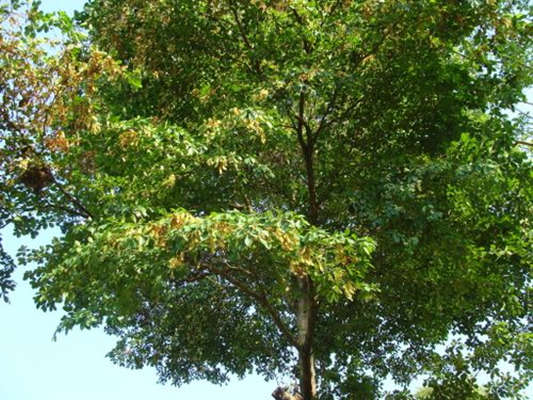
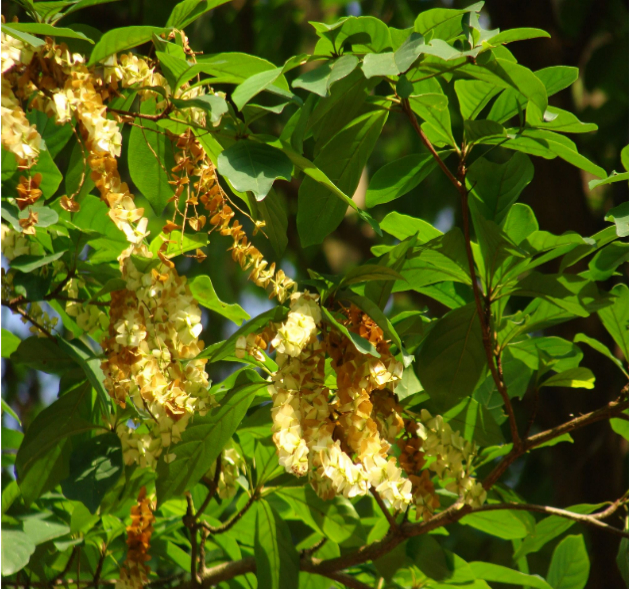
Fukadi (Terminalia amazonica)
Scientific Classification
Fukadi, scientifically known as Terminalia amazonica, belongs to the family Combretaceae within the order Myrtales. It is part of a genus widely distributed across tropical regions and known for producing structurally significant hardwood species.
General Description
Fukadi is a tall, emergent tropical hardwood tree distinguished by its strong architectural form and balanced crown structure. The tree typically develops an inverted cone or slightly flattened canopy, with erect, moderately spaced branches that contribute to a symmetrical and visually appealing profile. Mature individuals can reach heights of 20 to 35 metres and in optimal forest conditions may exceed 50 metres. The trunk is often fluted with a buttressed base, providing mechanical stability and anchorage in a variety of soil conditions. Its bark ranges from creamy brown to dark brown and is notable for emitting a subtle sweet or cucumber-like scent when fresh, a characteristic that helps distinguish it from similar species.
Geographic Distribution & Habitat
Fukadi is native to tropical regions of Central and South America, including the Guiana Shield, where it is commonly found in lowland tropical forests. The species demonstrates a high level of ecological adaptability, thriving in both well-drained upland soils and seasonally moist environments. It is frequently encountered in mixed forest systems, where it contributes to upper canopy formation and plays a role in maintaining forest structure. Its ability to grow across varying soil types, including sandy and clay-rich substrates, makes it particularly valuable for reforestation and restoration initiatives in diverse landscapes.
Ecological Importance
Ecologically, Fukadi serves as an important canopy species that supports biodiversity and contributes to ecosystem stability. Its flowers, which are arranged in axillary spikes and emit a mild fragrance, attract a range of pollinators including insects. The tree’s fruit, a drupe that matures from yellow-brown to reddish tones, provides a food source for wildlife. Additionally, its extensive root system plays a key role in soil stabilization, particularly in areas prone to erosion. By contributing to canopy cover and habitat complexity, Fukadi supports both flora and fauna within tropical ecosystems.
Uses & Economic Value
Fukadi is highly valued for its timber, which is known for its strength, durability and workability. The wood is commonly used in construction, furniture production and general carpentry, making it an economically important species in forestry sectors. Its relatively fast growth rate further enhances its suitability for commercial plantation systems and sustainable forest management programmes. In addition to timber production, the species is increasingly recognized for its role in restoration forestry, where it contributes to both ecological recovery and long-term economic returns.
Urban & Landscape Use (Recommended Use)
In urban and peri-urban environments, Fukadi is best suited for large open spaces such as parks, reserves, and wide roadway corridors. Due to its eventual size and expansive root system, it is not recommended for confined spaces or areas with significant infrastructure constraints. However, when appropriately sited, it can provide substantial shade, contribute to carbon sequestration and enhance the visual character of large landscapes.
Growth & Management
Fukadi exhibits moderate to fast growth, particularly in well-drained soils with adequate moisture. Its root system adjusts according to soil conditions, spreading more widely in sandy soils and growing deeper in clay-rich substrates. Proper spacing is essential to accommodate its mature size and ensure optimal crown development. The species requires relatively low maintenance once established, making it suitable for long-term planting programmes.
Credits: Vincent A. Vos via iNaturalist (Bolivia)
Credits: Cristian Borja via iNaturalist (Colombia)
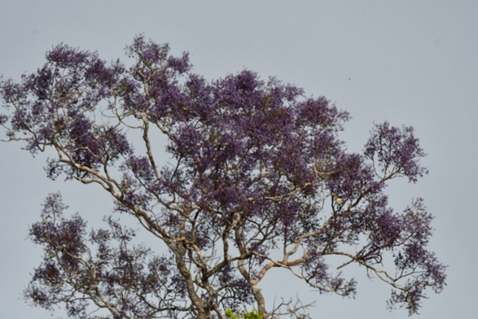
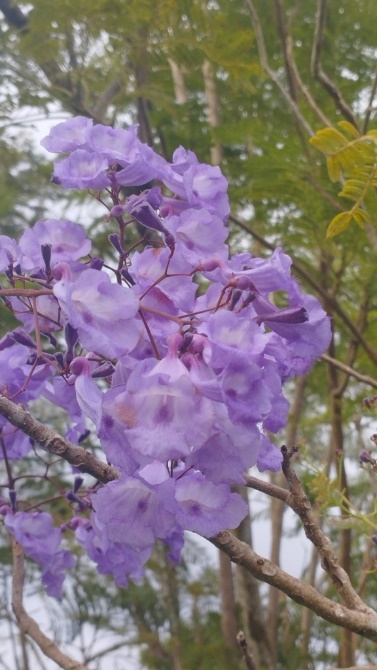
Futui (Jacaranda copaia)
Scientific Classification
Futui, scientifically referred to as Jacaranda copaia, belongs to the Bignoniaceae family within the order Lamiales, a group known for its ornamental and ecologically significant flowering trees.
General Description
Futui is a fast-growing tropical tree recognized for its light, airy canopy and striking floral display. The tree develops a rounded to flat-topped crown composed of multiple sub-canopies, giving it a layered and visually dynamic appearance. Its branches are erect and regularly forked, contributing to a balanced structural form. Typically reaching heights of 20 to 30 metres, Futui maintains a relatively open canopy that allows filtered light to pass through. The bark is light grey-brown and emits a subtle sweet scent, while its most notable feature is its vibrant inflorescence clusters of tubular, trumpet-shaped flowers in shades of purple to blue-purple with white interiors.
Geographic Distribution & Habitat
Futui is widely distributed throughout tropical South America, including Guyana, where it commonly occurs in secondary forests, forest edges and disturbed areas. Its ability to establish quickly in open environments makes it an important pioneer species in forest regeneration. The tree thrives in humid tropical climates and performs best in well-drained soils, although it demonstrates a degree of tolerance to varying site conditions.
Ecological Importance
Ecologically, Futui plays a significant role in supporting biodiversity and facilitating ecosystem recovery. Its flowers attract pollinators such as bees and other insects, while its structure provides habitat for small fauna. The species is particularly valuable in reforestation efforts due to its rapid growth and ability to colonize disturbed sites, thereby contributing to the restoration of forest cover and ecological balance.
Uses & Economic Value
Although not considered a high-density hardwood, Futui provides a light timber that is used for general carpentry, interior construction and the production of crates and boxes. Its ease of processing makes it a practical resource in local economies. Additionally, traditional uses include its application as a natural insect repellent, with smoke from its wood or leaves used to deter mosquitoes in rural settings.
Urban & Landscape Use (Recommended Use)
Futui is particularly well-suited for urban environments due to its relatively open canopy and moderate root system. It is ideal for roadside planting, parks and mixed-use landscapes where light penetration is desirable. Its seasonal flowering adds strong visual appeal, making it an excellent choice for beautification initiatives.
Growth & Management
The species exhibits moderate to fast growth, especially in moist, well-drained soils. Its root system includes a deep taproot supported by extensive lateral roots, which enhance stability and soil binding. Regular spacing and site selection are important to maximize its aesthetic and ecological benefits.
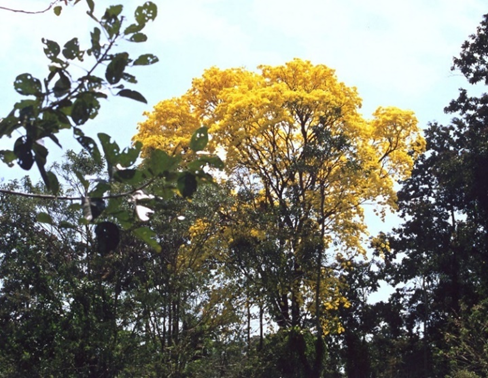
Credits: Rainer Mönke via naturgucker via GBIF (Costa Rica)
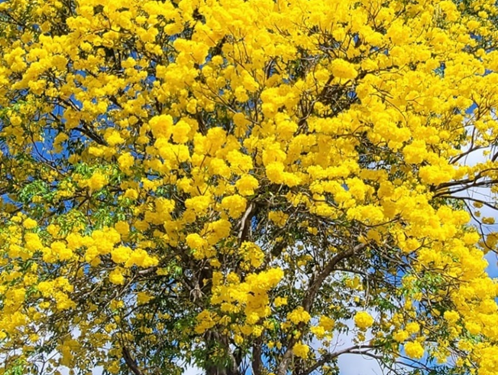
Credits: Michael Perreira via Rajkumar Singh via Facebook (Makapau Village)
Hakia / Yellow Poui (Handroanthus serratifolius)
Scientific Classification
Hakia, commonly referred to as Yellow Poui and scientifically known as Handroanthus serratifolius, belongs to the Bignoniaceae family.
General Description
Hakia is one of the most visually striking flowering trees in tropical regions, renowned for its brilliant yellow blooms that appear during the dry season. The tree develops a rounded crown with moderately dense branching and can reach heights of 15 to 30 metres. Its bark varies in tone from light brown to grey, often displaying textured patterns that add visual interest even outside the flowering season. The tree’s defining feature is its profuse flowering, where clusters of bright yellow, tubular flowers cover the canopy, often when the tree is leafless, creating a dramatic and iconic landscape feature.
Geographic Distribution & Habitat
This species is native to tropical regions of Central and South America and is widely distributed across the Caribbean and the Guiana Shield. It is typically found in well-drained soils and adapts well to seasonal climatic variations, particularly those with distinct dry periods that trigger its flowering cycle.
Ecological Importance
Hakia plays an important role in supporting pollinators, particularly bees and birds, which are attracted to its abundant nectar-rich flowers. Its seasonal flowering contributes to ecological cycles by providing resources during periods when other species may not be in bloom.
Uses & Economic Value
In addition to its ornamental value, Hakia produces a dense and durable hardwood that is highly valued for construction and specialty uses. Its aesthetic appeal also makes it a preferred species for landscaping and urban beautification projects.
Urban & Landscape Use (Recommended Use)
Hakia is ideally suited for avenues, roundabouts and prominent public spaces where its seasonal flowering can be fully appreciated. It is often used as a signature tree in urban design due to its strong visual impact and cultural significance.
Growth & Management
The species grows at a moderate rate and performs best in well-drained soils with adequate sunlight. It requires minimal maintenance once established and is relatively resilient to environmental stress.
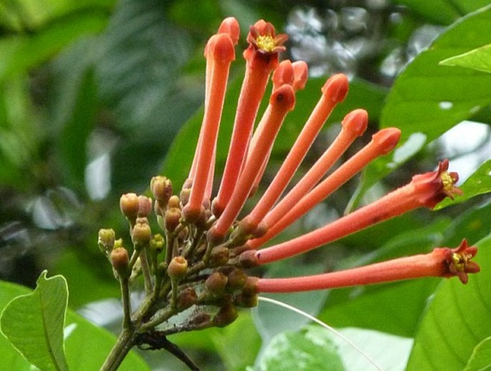
Credits: Jindřiška Vančurová via Botany.cz (Brasil)
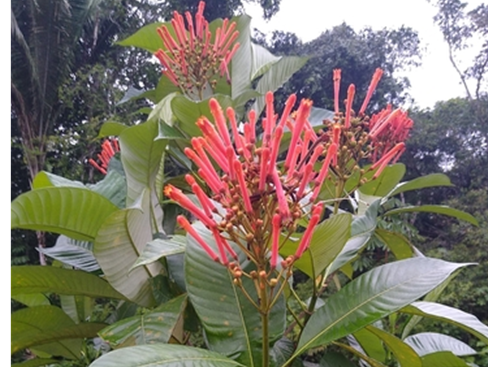
Credits: Enrique Salazar via iNaturalist (Brasil)
Kamandan (Isertia hypoleuca)
Scientific Classification
Kamandan, scientifically known as Isertia hypoleuca, belongs to the Rubiaceae family, a group that includes several ecologically important and flowering plant species.
General Description
Kamandan is a medium-sized tree that brings both colour and ecological value into any landscape. It typically grows between 10 and 15 metres in height and forms a rounded to slightly spreading crown. What makes this species stand out immediately is its vibrant clusters of red to pink tubular flowers, contrasted by yellow-green calyxes. These flowers are not just visually appealing; they bring life into the space by attracting birds and insects.
The bark is smooth and light grey-brown, giving the tree a clean, understated appearance when not in bloom. Overall, Kamandan strikes a balance between being noticeable without being overwhelming, which makes it a very useful species in planned landscapes.
Geographic Distribution & Habitat
Kamandan is native to tropical South America and occurs naturally along forest edges and in secondary growth areas. It thrives in humid tropical conditions and prefers well-drained soils, although it shows good adaptability once established.
Ecological Importance
This species plays a strong supporting role in maintaining biodiversity. Its flowers are particularly attractive to hummingbirds and pollinators, which makes it an excellent addition to urban biodiversity corridors. Because it can flower throughout the year, it provides a more consistent ecological benefit compared to strictly seasonal species.
Uses & Economic Value
Kamandan is primarily used as an ornamental species rather than for timber. Its real value lies in its ability to enhance landscapes while supporting ecological function. It is especially useful in projects where both visual appeal and environmental impact are important.
Urban & Landscape Use (Recommended Use)
Kamandan works extremely well in residential communities, parks and landscaped public areas. Its size makes it manageable, and it does not interfere heavily with infrastructure. It is a strong option for urban greening programmes where biodiversity is a priority, especially in spaces where you want to attract birds and pollinators.
Growth & Management
The species grows at a moderate rate and performs best in moist, well-drained soils. It requires minimal intervention once established and can be easily integrated into both formal and informal planting designs.
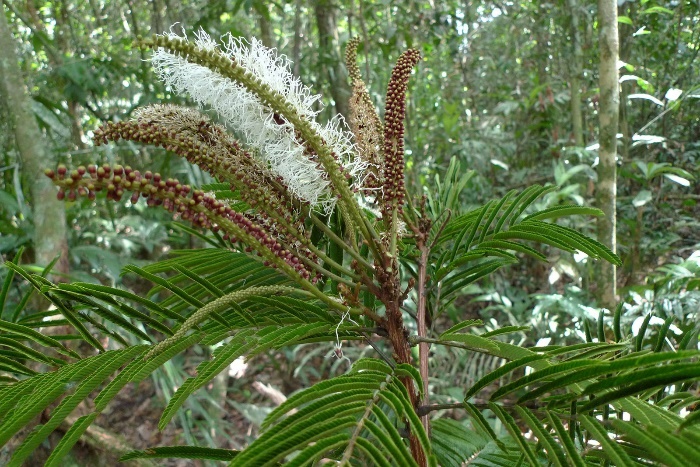
Credit: Zappi, D.C. 2993 via Kew RBG POWO (Amazonas, Brasil)
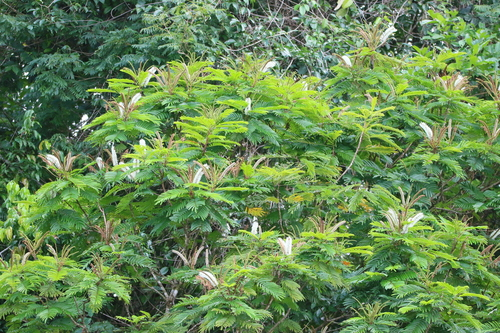
Credit (L): Project Seawolf via iNaturalist (Upper Demerara-Berbice, Guyana)
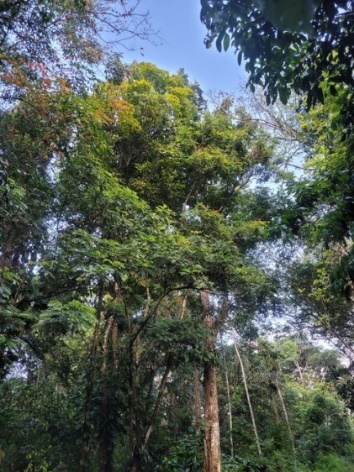
Credit (R): Guillaume Léotard via iNaturalist (Amapa Brasil)
Trysil (Pentaclethra macroloba)
Scientific Classification
Trysil, or Pentaclethra macroloba, is a member of the Fabaceae family, which includes several nitrogen-fixing species critical to ecosystem health.
General Description
Trysil is a large, dominant forest tree that commands space and plays a significant structural role in any landscape where it is planted. It can reach heights of 20 to 40 metres and develops a dense, rounded canopy with strong, upright growth. The trunk is straight and columnar, often becoming hollow as the tree matures, which is a natural characteristic of older individuals.
Its flowers form in long, dense clusters that appear around the canopy, creating a subtle but attractive display. The tree produces large woody pods, which are also a defining feature of the species.
Geographic Distribution & Habitat
This species is native to the Amazon basin and the Guiana Shield, including Guyana. It thrives in humid tropical forests and is well adapted to high rainfall environments.
Ecological Importance
Trysil is one of the more important ecological species in this group due to its ability to fix nitrogen. This means it actively improves soil fertility, making nutrients more available to surrounding vegetation. In many cases, planting Trysil contributes to the long-term improvement of degraded lands.
It also supports forest ecosystems by providing habitat and contributing to overall canopy structure.
Uses & Economic Value
Beyond its ecological value, Trysil has applications in agroforestry systems and land restoration programmes. It is not primarily planted for timber, but rather for its long-term environmental benefits, including soil enrichment and ecosystem support.
Urban & Landscape Use (Recommended Use)
Trysil is best suited for large-scale planting initiatives, including reforestation areas, buffer zones and forest reserves. Due to its size and dense canopy, it is not recommended for confined urban environments or areas with limited space.
Growth & Management
The species grows relatively quickly under suitable conditions and develops a deep root system. It requires space to mature properly and is best planted in areas where long-term ecological benefits are the primary objective.
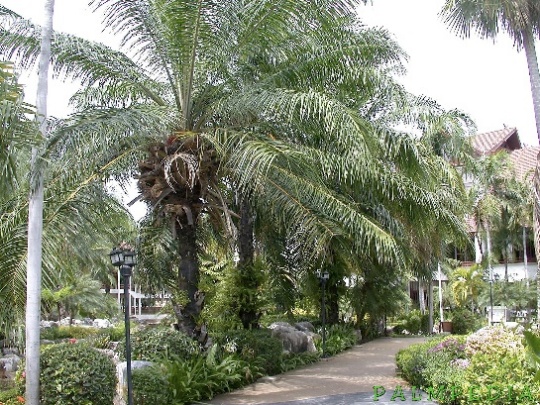
Credits: Lucas Kaminski via iNaturalist Database
Credits: Lucas Kaminski via iNaturalist Database
Abae Palm (Elaeis guineensis)
General Description
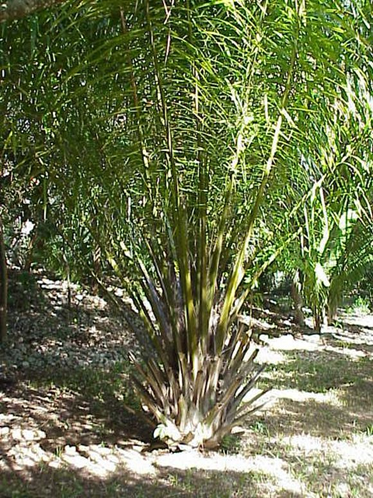
Abae Palm, also known as the African Oil Palm, is a robust and economically significant species recognized for its dense crown and heavy fruit production. The tree forms a full canopy of long, arching leaves and can grow between 15 and 30 metres in height.
Geographic Distribution & Habitat
Although native to West Africa, this species is now widely cultivated across tropical regions, including Guyana. It thrives in humid climates and performs best in areas with consistent rainfall.
Ecological Importance
Abae Palm contributes to food systems through its fruit production and supports certain wildlife species. However, in managed environments, its ecological role is often secondary to its economic value.
Uses & Economic Value
This species is one of the most important oil-producing plants globally. Its fruit is processed into palm oil, which is widely used in food, cosmetics and industrial products. Locally, it can also contribute to small-scale economic activity.
Urban & Landscape Use (Recommended Use)
While visually impactful, Abae Palm should be used carefully in urban settings. It is best suited for controlled landscapes, agricultural areas, and designated planting zones.
Growth & Management
The species requires regular maintenance, particularly due to fruit drop. It performs best in fertile soils and benefits from proper spacing and management.
Credits: Maboobjan A via iNaturalist Database
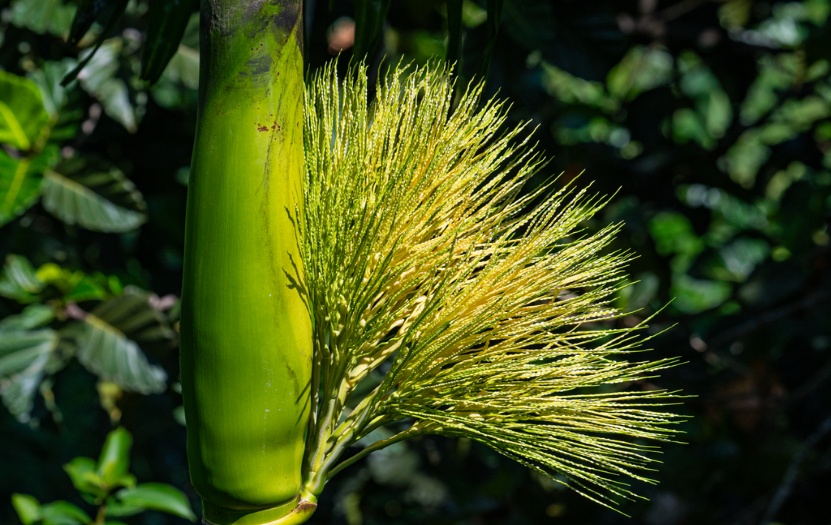
Credit: Dmytro & Elena via iNaturalist Database
Supari Palm (Areca catechu)
General Description
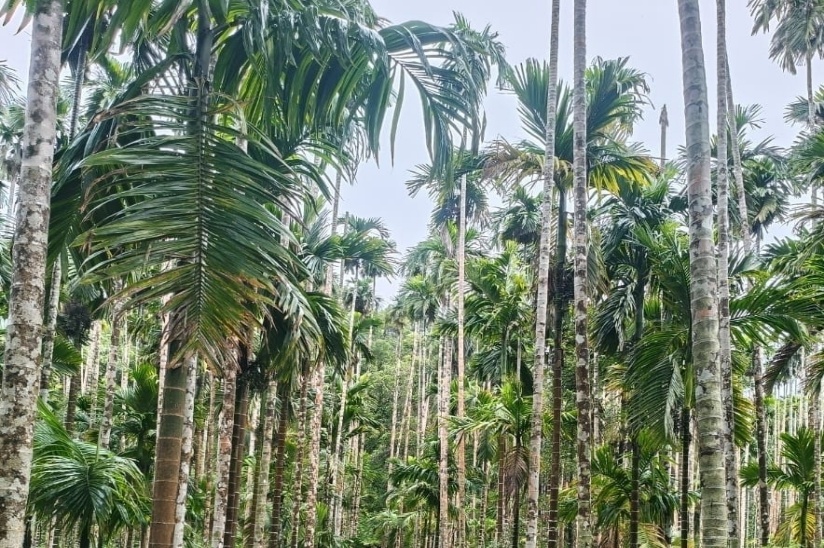
Supari Palm is a slender, upright palm known for its clean, elegant appearance. It typically grows up to 20 metres in height and features a smooth trunk with a distinctive green crown shaft. Its symmetrical form makes it a favourite for decorative planting.
Geographic Distribution & Habitat
Originally from Southeast Asia, Supari Palm is widely cultivated across tropical regions and adapts well to Guyana’s climate.
Ecological Importance
While not a major ecological driver, the species contributes to landscape diversity and can support small fauna.
Uses & Economic Value
The tree produces betel nuts, which have cultural and economic significance in various regions. It is also widely used as an ornamental species.
Urban & Landscape Use (Recommended Use)
Supari Palm is ideal for decorative landscaping, especially along walkways, entrances and institutional compounds. Its vertical growth habit makes it suitable for areas where space is limited horizontally.
Growth & Management
It grows at a moderate rate and is relatively easy to maintain. It adapts to different soil types and performs well in managed landscapes.
Credits: Lu Luna via iNatural Database
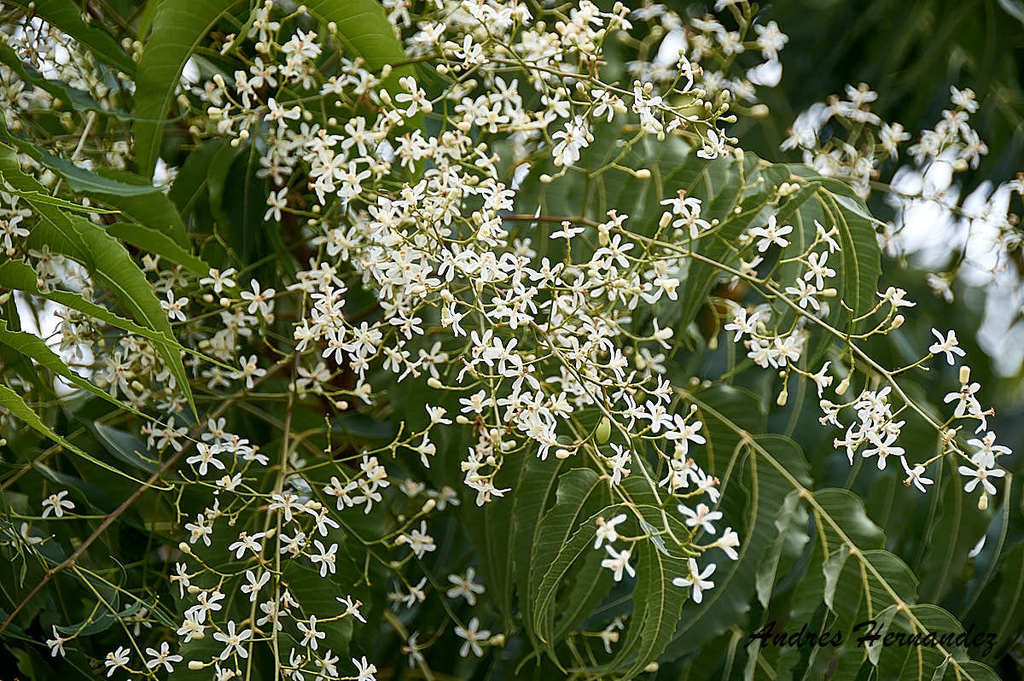
Credit: Andres Hernandez via iNatural Database
Neem (Azadirachta indica)
General Description
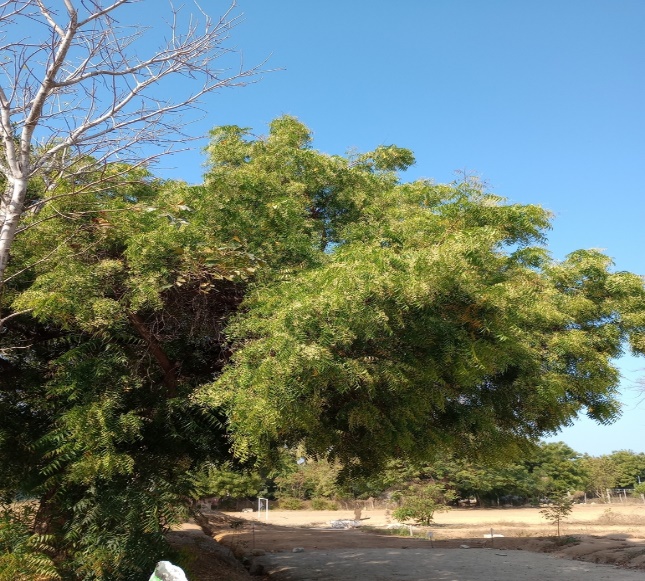
Neem is one of the most versatile and resilient tree species available for planting. It develops a wide, dense crown and can reach heights of 15 to 30 metres. The tree is known for its durability and ability to thrive in challenging conditions.
Geographic Distribution & Habitat
Native to South Asia, Neem is now widely established across tropical regions worldwide. It is particularly suited to dry and degraded environments.
Ecological Importance
Neem contributes to soil improvement and offers natural pest control properties. Its presence in a landscape can help reduce reliance on chemical pesticides.
Uses & Economic Value
Almost every part of the Neem tree has a use. It is widely used in traditional medicine, natural pesticides and cosmetic products. Its economic and environmental value makes it one of the most important multipurpose trees globally.
Urban & Landscape Use (Recommended Use)
Neem is highly recommended for roadside planting, community spaces, and climate-resilient urban areas. It is especially valuable in areas exposed to heat and drought.
Growth & Management
It is fast-growing, drought-tolerant, and requires very little maintenance once established, making it ideal for long-term planting programmes.
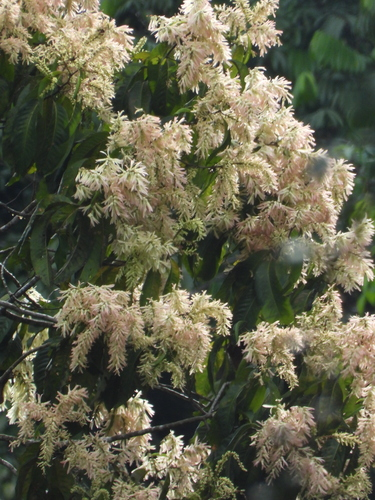
Credits: Sébastien Sant via iNaturalist (French Guiana)
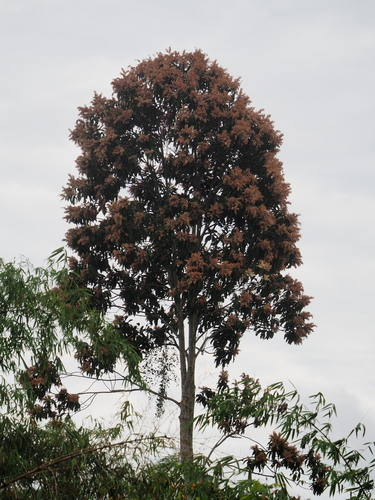
Credits: Andra Waagmeester via iNauralist
Long John (Triplaris weigeltiana)
General Description
Long John is a medium-sized tree with large, heart-shaped leaves and a distinctive ecological characteristic; its hollow stems are often inhabited by ants.
Geographic Distribution & Habitat
The species is native to northern South America, including Guyana, and is commonly found in tropical environments.
Ecological Importance
The tree has a unique relationship with ants, which use its hollow stems for shelter. In return, the ants help protect the tree from herbivores, creating a natural defense system.
Uses & Economic Value
It is mainly used as an ornamental species and has limited commercial timber value.
Urban & Landscape Use (Recommended Use)
Long John is best suited for parks and controlled landscapes, where its unique features can be appreciated. It should not be placed in high-traffic areas due to the presence of ants.
Growth & Management
It grows relatively quickly and requires thoughtful placement to avoid potential conflicts with human activity.
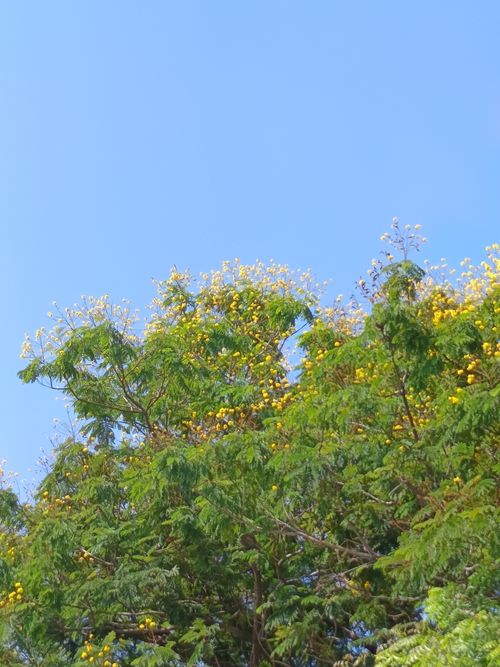
Credits: Vidhya Swaminathan via Global Biodiversity Information Facility Database
Credit: Omm Suvam Nayak via Global Biodiversity Information Facility Database
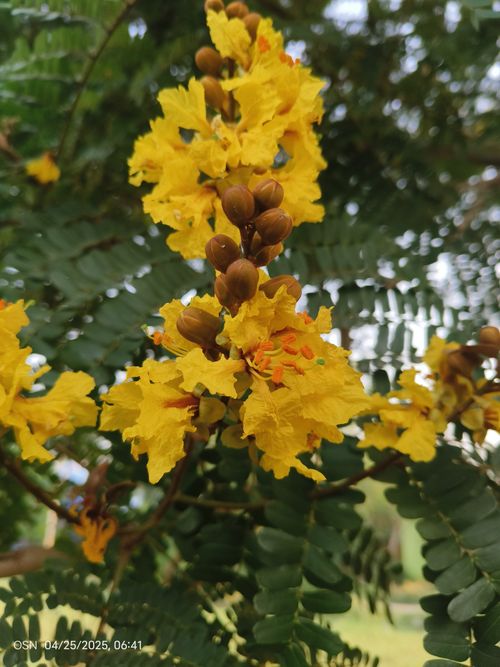
Yellow Flame (Peltophorum pterocarpum)
General Description
Yellow Flame is a wide-spreading ornamental tree known for its bright yellow flowers and strong shade potential. It develops an umbrella-shaped canopy that provides extensive coverage.
Geographic Distribution & Habitat
Native to tropical Asia, the species is widely planted across tropical regions due to its adaptability and visual appeal.
Ecological Importance
As a nitrogen-fixing species, Yellow Flame contributes to soil fertility and supports sustainable planting systems.
Uses & Economic Value
Primarily used as an ornamental and shade tree, it plays a significant role in urban landscaping and public space development.
Urban & Landscape Use (Recommended Use)
This species is ideal for highways, large parks and open urban areas, where its canopy can provide shade and reduce heat.
Growth & Management
It grows quickly and requires adequate space due to its wide canopy spread. Proper placement is key to maximizing its benefits.
Credit: Discover Guyana Photo: @peteoxfordphotography
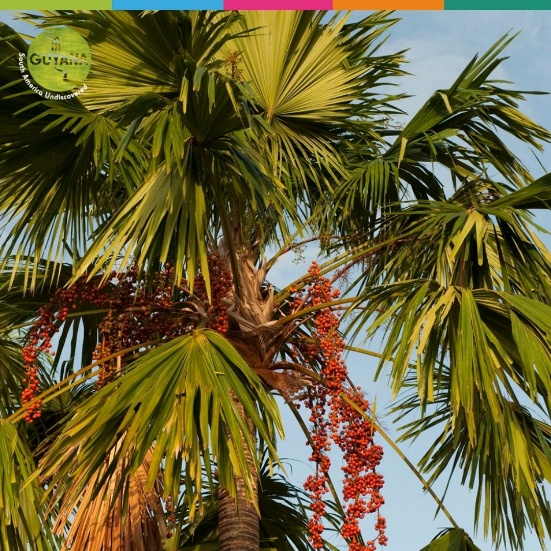
Ite Palm (Mauritia flexuosa)
Scientific Classification
Ite Palm, scientifically known as Mauritia flexuosa, belongs to the Arecaceae family. It is one of the most recognizable palm species across tropical South America and plays a significant role in wetland ecosystems.
General Description
Ite Palm is a tall, elegant palm species characterized by its straight, slender trunk and a crown of large, fan-shaped leaves that spread outward in a symmetrical pattern. It can grow up to 20 to 35 metres in height, making it one of the more prominent palm species in the landscape. The trunk is typically unbranched and marked with the scars of fallen leaves, giving it a textured appearance.
What makes Ite Palm particularly distinctive is its strong association with water. It is often found in clusters, forming visually striking stands in swampy or waterlogged areas. The tree produces large quantities of fruit, which are brownish-red and covered in scales and are widely consumed by both wildlife and humans.
Geographic Distribution & Habitat
Ite Palm is native to tropical regions of South America, including Guyana, where it is commonly found in low-lying, swampy areas, riverbanks and wetlands. It thrives in waterlogged soils and is well adapted to flooded conditions, often forming part of what are known as “moriche” or palm swamp ecosystems.
Ecological Importance
This species plays a critical ecological role in wetland environments. Its fruit is an important food source for birds, mammals and aquatic species, while its structure provides habitat and nesting opportunities. Ite Palm also contributes to water regulation and helps maintain the integrity of wetland ecosystems.
Because of its ability to thrive in saturated soils, it is especially valuable for maintaining ecological balance in flood-prone areas.
Uses & Economic Value
Ite Palm is widely used in traditional and local economies. Its fruit is consumed fresh or processed into beverages and other products. The leaves are commonly used for thatching, weaving and craft production, while other parts of the tree may be used for construction or household purposes.
Its versatility makes it both an ecological and cultural asset.
Urban & Landscape Use (Recommended Use)
Ite Palm is best suited for wetland restoration projects, riverbank stabilization, and low-lying landscapes. It is not ideal for standard urban environments unless water conditions can be maintained. However, in appropriate settings, it creates a very strong visual identity and can enhance eco-tourism or natural landscape designs.
Growth & Management
The species grows well in permanently moist or flooded soils and requires minimal maintenance once established. It should be planted in areas where water availability is consistent, as it does not perform well in dry conditions.
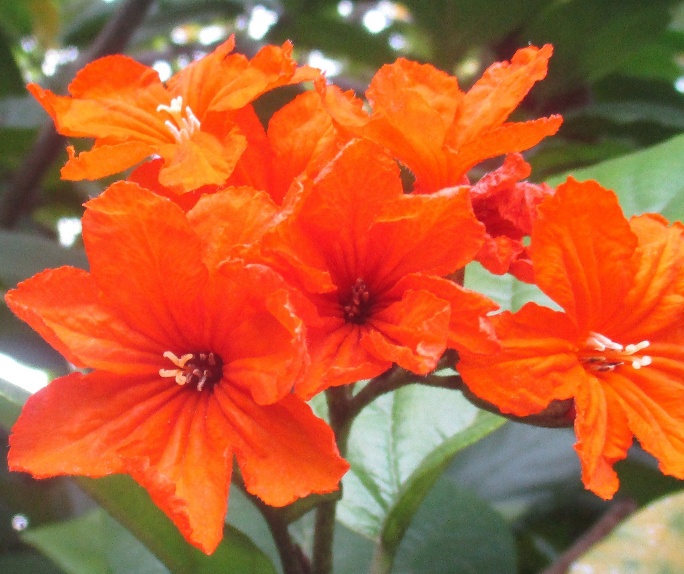
Scarlet Cordia (Cordia sebestena)
Scientific Classification
Scarlet Cordia, scientifically known as Cordia sebestena, belongs to the Boraginaceae family and is widely recognized as an ornamental flowering tree in tropical regions.
General Description
Scarlet Cordia is a small to medium-sized tree that stands out immediately for its vibrant orange to scarlet-red flowers. Typically growing between 6 and 12 metres in height, it forms a rounded, moderately dense crown with broad, slightly rough-textured leaves.
The flowers are large, trumpet-shaped and appear in clusters, creating a bold and continuous display of colour throughout much of the year. This makes the tree particularly attractive in landscaped environments, where visual impact is a priority.
Its overall form is compact and manageable, which makes it well-suited for controlled planting spaces.
Geographic Distribution & Habitat
The species is native to the Caribbean and parts of northern South America and has been widely planted across tropical and coastal regions. It thrives in warm climates and shows a strong tolerance for sandy soils and coastal conditions.
Ecological Importance
Scarlet Cordia contributes to urban biodiversity by attracting pollinators such as bees and butterflies. Its extended flowering period ensures that it provides a reliable source of nectar over time.
In coastal environments, it also plays a role in stabilizing sandy soils and contributing to green coastal buffers.
Uses & Economic Value
While not typically used for timber, Scarlet Cordia is highly valued as an ornamental species. It is frequently planted in public spaces, gardens and along roadsides for its aesthetic appeal.
Its ability to thrive in coastal conditions also makes it useful in tourism-related landscaping.
Urban & Landscape Use (Recommended Use)
Scarlet Cordia is ideal for urban beautification projects, residential areas, coastal roads and public spaces. Its manageable size makes it suitable for planting near buildings, sidewalks and smaller landscaped areas.
It is one of the best options when you want consistent colour and visual impact without large canopy spread.
Growth & Management
The species grows at a moderate rate and performs best in well-drained soils with full sunlight. It is relatively low maintenance and responds well to pruning, which can help shape the tree for urban environments.
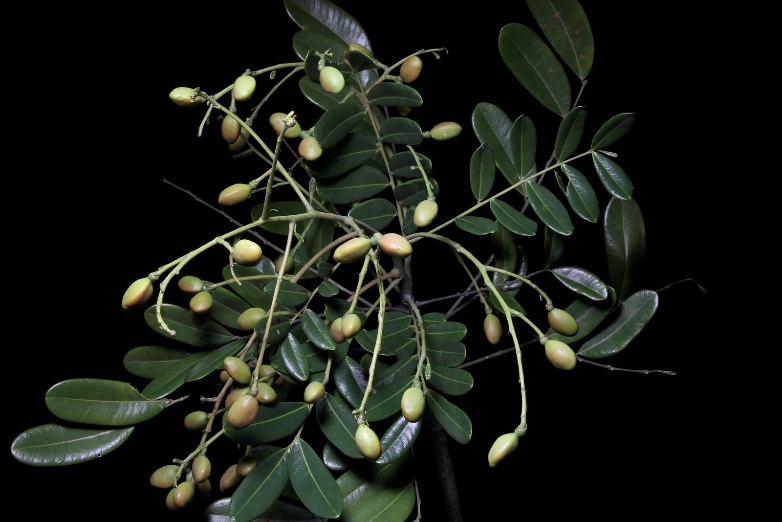
Simarupa (Simarouba amara or Quassia simarouba)
Scientific Classification
Simarupa, scientifically known as Simarouba amara (synonym: Quassia simarouba), belongs to the Simaroubaceae family. It is a well-documented tropical species recognized for both its ecological role and its traditional medicinal uses.
General Description
Simarupa is a medium to large tropical tree that can grow between 15 and 35 metres in height, and in some cases even taller under favourable conditions. It develops a straight, upright trunk that may appear slightly swollen at the base, with a broad but moderately light crown formed by thick, erect to spreading branches.
The bark is one of its more distinctive features. It ranges in colour from cream-brown to yellow-brown and becomes fissured and slightly scaly as the tree matures. When cut or exposed, the bark has a noticeable bitter taste and may emit either a bitter or slightly sweet scent. This characteristic is consistent throughout the wood, including both sapwood and heartwood, which are typically light brown.
The leaves are arranged alternately and are compound, giving the tree a somewhat layered, textured appearance. The leaf surfaces are smooth and glossy above, while the underside may appear duller or slightly rough. The tree produces small green to yellow-green flowers arranged in terminal clusters, followed by black, fleshy fruits (drupes) that are elliptical to oval in shape.
Geographic Distribution & Habitat
Simarupa is widely distributed across tropical regions of Central and South America, including Guyana. It is commonly found in evergreen and semi-deciduous forests, particularly on brown sandy soils. The species is also present in mixed forest types and Wallaba forests, demonstrating a strong adaptability to different forest environments.
It is considered a light-demanding species at early stages, with seedlings and saplings requiring sufficient sunlight to establish successfully.
Ecological Importance
Simarupa plays an important role in forest ecosystems, both structurally and functionally. Its fruits are consumed by wildlife, particularly species such as howler monkeys and spider monkeys, which contribute to natural seed dispersal. This process supports forest regeneration and the spread of the species across suitable habitats.
The tree also contributes to overall forest diversity and canopy structure, making it a valuable component of mixed tropical forests.
Uses & Economic Value
Simarupa is well known for its traditional medicinal uses. Infusions made from the bark or roots have historically been used to treat conditions such as indigestion, dysentery, and diarrhoea. This aligns with its characteristic bitter compounds, which are often associated with therapeutic properties.
The wood, while relatively light, can be used for general purposes such as light construction and carpentry. Additionally, the species has growing interest for oil production from its seeds, which has potential applications in food, cosmetics and biofuel industries.
Urban & Landscape Use (Recommended Use)
Simarupa is best suited for reforestation, restoration projects, and large mixed landscapes. While it can be used in urban environments, it is more appropriate for larger green spaces, buffer zones, and ecological corridors where it has room to develop naturally.
Its ecological benefits, particularly in supporting wildlife and regeneration, make it a strong candidate for sustainable land management initiatives.
Growth & Management
The species grows at a moderate rate and establishes well in suitable tropical conditions. It prefers well-drained soils and adequate light, especially during early growth stages. Once established, it requires minimal maintenance and can adapt to a range of forest environments.
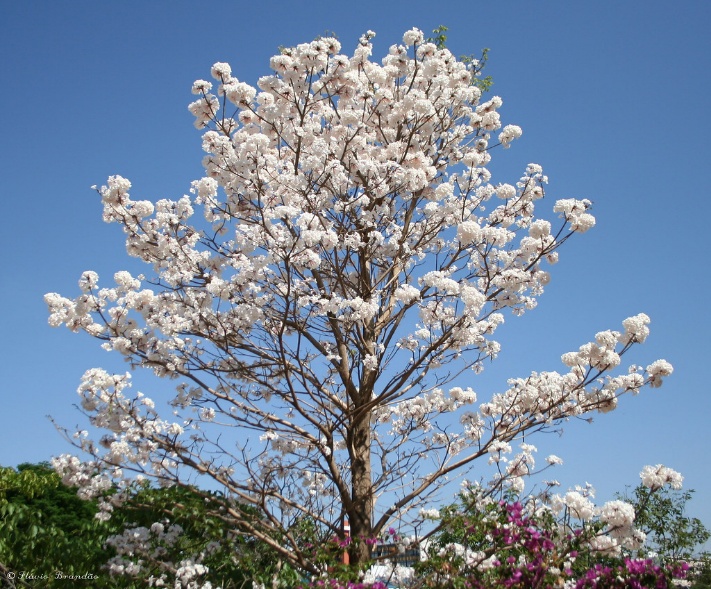
Credit: Flavio Crivinel via Flickr
White Poui (Tabebuia rosea / Tabebuia heterophylla)
Scientific Classification
White Poui is commonly associated with species such as Tabebuia rosea or Tabebuia heterophylla, both of which belong to the Bignoniaceae family. These species are closely related to Yellow Poui and share similar structural characteristics.
General Description
White Poui is a medium to large flowering tree known for its soft, elegant blooms that range from white to pale pink. It typically grows between 15 and 25 metres in height and develops a spreading, rounded crown that provides moderate shade.
Unlike the bold, intense display of Yellow Poui, White Poui offers a more subtle and refined appearance. Its flowers are also trumpet-shaped but appear in lighter tones, often creating a softer visual effect across the canopy. The tree may shed its leaves prior to flowering, allowing the blooms to stand out more prominently.
The bark is generally grey to light brown and relatively smooth in younger trees, becoming slightly textured with age.
Geographic Distribution & Habitat
White Poui species are native to tropical regions of the Caribbean and Central and South America. They are well adapted to a range of soil conditions and can tolerate both coastal and inland environments, making them versatile for planting.
Ecological Importance
Like its yellow counterpart, White Poui supports pollinators by providing nectar-rich flowers. Its seasonal flowering contributes to biodiversity and enhances the ecological value of both natural and urban landscapes.
Uses & Economic Value
White Poui is primarily valued for its ornamental qualities. It is widely planted in urban areas, gardens, and along roadways due to its attractive flowering and manageable canopy. Its wood may be used in light construction, although it is not typically a primary timber species.
Urban & Landscape Use (Recommended Use)
White Poui is highly suitable for urban environments, including residential areas, parks, roadways, and coastal landscapes. Its moderate size and softer canopy make it easier to integrate into built environments compared to larger species.
It is especially effective in creating visually pleasing streetscapes without overwhelming surrounding infrastructure.
Growth & Management
The species grows at a moderate rate and performs best in full sunlight with well-drained soils. It is relatively low maintenance and responds well to pruning when shaping is required.
Planting with Purpose
Public access to clear species information strengthens stewardship, helps communities choose the right tree for the right place, and supports more resilient, attractive, and biodiverse landscapes across Guyana.

Location: National Park, Thomas Lands, Georgetown, Guyana.
Phone: + 592 227 2265 + 592 226 2323
Email: info@pac.gov.gy
Monday – Thursday 8 am – 4:30 pm
Friday 8 am – 3:30 pm
Saturday – Sunday – Closed
Protected Areas
- Office of the President
- Protected Areas Trust (Guyana)
- Environmental Protection Agency
- Guyana Wildlife Conservation and Management Commission
- Guyana Geology and Mines Commission
- Guyana Lands and Survey Commission
- Ministry of Natural Resources
- Ministry of Amerindian Affairs
- Ministry of Tourism, Industry and Commerce
- Guyana Tourism Authority
- Iwokrama International Centre
- Low Carbon Development Strategy